Explore the ancient origins of the New Forest, from Bronze Age barrows and Norman Forest Law to maritime heritage, wartime history and cultural traditions.
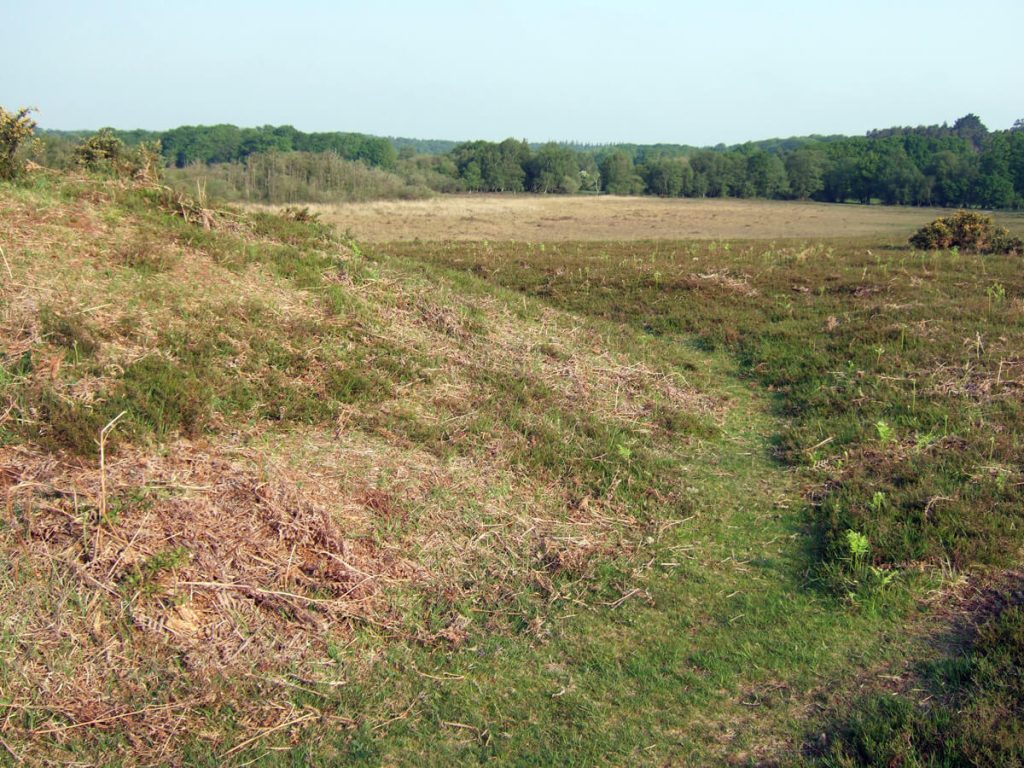
The New Forest is often described as ancient, but its history is not locked away in the past. It can still be seen in the land today: in burial mounds, old trackways, woodland boundaries, maritime villages, wartime remains and the open landscapes that give the Forest its distinctive character.
Human interaction with this landscape reaches back thousands of years. Bronze Age barrows, or burial mounds, are still visible across the Forest, offering some of the oldest surviving evidence of people living, working and gathering here. Long before the name “New Forest” existed, this was a place of settlement, movement and meaning. By the 5th century, the area was known as Ytene, often understood as “the place of the Jutes”.
The Forest we recognise today was formally created by William the Conqueror around 1079 as a royal hunting ground. It was established for the pursuit of the “beasts of the chase”, including deer and wild pigs. With this came Forest Law and an administrative and legal system whose legacy can still be seen in the Verderers’ Court at Lyndhurst.
The New Forest also holds a special place in the Domesday Book, where it is recorded in unusual detail. Few landscapes in England carry such a visible connection between medieval law, land use and local identity. The death of William II, known as William Rufus, in the Forest in 1100, remains one of its most familiar historical stories.
Over the centuries, the Forest’s timber became part of England’s naval strength. During the Tudor, Elizabethan, and later naval periods, oak from the Forest helped supply the shipbuilding industry. At Buckler’s Hard, more than 50 wooden ships were built for the Royal Navy, including vessels that fought at the Battle of Trafalgar. The village remains one of the clearest links between the Forest’s natural resources and the nation’s maritime history.
The Forest also played a significant role during the Second World War. Balmer Lawn, near Brockenhurst, was used for high-level planning meetings before D-Day. Ashley Walk became a bombing range, where weapons and tactics were tested on a landscape that still carries traces of that military past. Troops also left from Lepe for Normandy, making the coast and Forest part of the wider story of liberation.
This built and archaeological heritage is remarkable. The National Park contains hundreds of scheduled monuments and listed buildings, from prehistoric barrows and Roman remains to salt-making sites, shipbuilding villages, churches, cottages and wartime airfields. Ongoing archaeological work continues to reveal new sites and landscape features, reminding us that much of the Forest’s story is still being discovered.
Its cultural heritage is just as important. The New Forest Heritage Centre in Lyndhurst, Buckler’s Hard and St Barbe Museum and Art Gallery all help tell the story of the people, practices and places that shaped the Forest. The New Forest Embroidery, commissioned to mark the 900th anniversary of the Forest’s creation, is a powerful example of how art, memory, nature and local identity can come together.
For the New Forest Association, this history matters because it gives depth to the landscape we work to protect. The Forest is important not only for what it is today but also for the layers of human and natural history it carries.
By understanding its ancient origins, we can better protect the character, heritage and meaning of the New Forest for the future.
Join us and help protect the heritage and landscape of the New Forest.
Registered charity no. 260328
New Forest Association © 2026
All rights reserved
All photographs ©
Photographs courtesy: Clive Chatters, Gale Pettifer, Steve Laycock, Mike Read, Brian Tarnoff, Peter Roberts, John Ward.