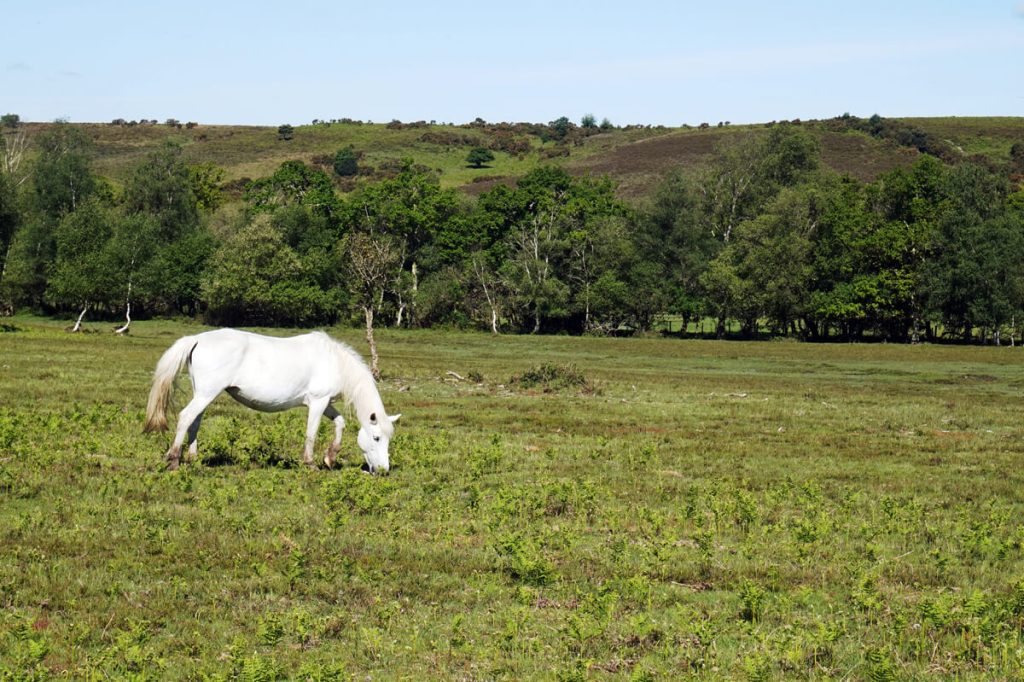
The New Forest is one of the most important natural landscapes in the UK. Its heathlands, woodlands, mires, streams, pasture, lawns and open Forest form a rare mosaic of habitats, shaped by nature, commoning and careful management. Protecting that living system means putting the Forest’s long-term health first.
Much of the New Forest is protected through national and international designations, including Sites of Special Scientific Interest, Special Protection Area, Special Area of Conservation and Wetland of International Importance status. These protections recognise what local people have long understood: the Forest is a rare and delicate landscape whose habitats, wildlife and natural features must be actively conserved and restored.
Most of the protected Crown lands are managed by Forestry England, while other important protected sites, including SSSIs, National Nature Reserves and Local Nature Reserves, are managed by organisations such as the National Trust, Hampshire & Isle of Wight Wildlife Trust and Hampshire County Council.
Managing such a complex landscape is not simple. There can be competing pressures between conservation, recreation, forestry, access, commoning and legal duties. Commoners, land managers, public bodies and conservation specialists may not always agree on the best course of action.
The New Forest Association’s position is clear: decisions affecting the Forest must protect its natural flora, fauna, physical features and wider landscape character. Where habitats have been damaged, fragmented or placed in unfavourable condition, restoration should be a priority.
Over many decades, changes in land use, drainage, development, inappropriate planting and recreational pressure have affected the Forest’s special character. Some streams and mires have been damaged. Some habitats have become fragmented. Some areas have lost the openness, diversity and ecological richness that make the New Forest unique.
We support the restoration of damaged habitats, the recovery of SSSIs in unfavourable condition and the reduction of habitat fragmentation across the Forest.
We support the careful restoration of historic mires and streams where this can be achieved without the overall loss of grazing important to commoners’ stock.
We support the removal of intrusive species such as self-sown pine and rhododendron where they threaten native habitats and the wider Forest landscape.
We also support a better balance between conifer and broadleaved woodland within the Inclosures, including returning appropriate areas to the open Forest where this would benefit landscape, ecology and commoning.
The Association participates in discussions about long-term and annual management programmes for the Forest and maintains a watching brief over operations on particularly sensitive and ecologically important Crown land.
Where there is conflict between conservation and public enjoyment, we believe the Sandford Principle should apply: conservation must come first.
The Forest cannot speak for itself. By protecting its habitats and landscape, we help protect the living systems that sustain everything else.
Join us and help protect the habitats, wildlife and landscape of the New Forest.
Registered charity no. 260328
New Forest Association © 2026
All rights reserved
All photographs ©
Photographs courtesy: Clive Chatters, Gale Pettifer, Steve Laycock, Mike Read, Brian Tarnoff, Peter Roberts, John Ward.