| New Forest District Council has sent two draft Public Spaces Protection Orders (PSPO) , which we broadly support, for public consultation. The first to ban the lighting of fires and use of BBQs (principally on the Crown Lands), and the second to ban the feeding and petting of ponies, horses, mules, and donkeys in the open areas of the New Forest. The consultation runs for nearly 8 weeks from Monday 6th December 2022 to Friday 27th January 2023.
In this fifth in the series on PSPO’s we give our recommendations For a Draft Dog Control PSPO, how they stack up against existing guidance, and What the Kennel Club Says About PSPOs. |
Kennel Club and PSPO:
When PSPOs were first introduced to replace Dog Control Orders in the Anti-social Behaviour, Crime and Policing Act 2014, the Kennel Club were supportive of their use for irresponsible dog owners under the previous Dog Control Orders, but worried chiefly about the impact on responsible dog walkers, and unhappy with how some councils brought them forward. 2015 DEFRA guidance added dog law and welfare experts to the list of PSPO consultees which already included the Kennel Club. In their 2016 report on PSPOs “Out Of Order – The Impact Of Access Restrictions On Dogs And Their Owners” the Kennel Club cite instances of councils imposing orders without deeming consultation necessary, a council erecting restriction signage before the consultation had finished, and councils either not including exemptions for registered blind people and assistance dogs or not providing suitable alternative space where their needs could be met.
In 2018 they trumpeted a victory over legal challenge of overly broad language in Richmond dog’s PSPO.
| The parts of the order which were successfully challenged and which were quashed included that a person could be found guilty of an offence if their dog ‘causes an annoyance to another person or animal’ or ‘causes damage to any Council structure, equipment, tree, turf or other Council property’, which could include damage to grass from urination.[*] |
While the language is indeed questionable, there seems no evidence that anyone was ever charged with “lawn damage”. The judge ruled that the annoyance provision added nothing to the provision on keeping a dog under control, and that there was insufficient evidence to demonstrate a need for the prohibition on causing damage as defined in the order. The restriction limiting dog numbers per walker was upheld at 4, although 18 professional dog walkers may be licensed for 6, and residents may walk up to 6 under a permit system. Currently 12 of the 18 available Richmond licenses are in use.
Many of the Kennel Club’s initial reservations seem to have now been addressed. Councils uniformly carry out consultation on PSPOs and include exemptions, some go as far as carrying out Equality Impact Assessments to show that no group is unduly disadvantaged by the order. Their chief concerns continue to be any blanket restrictions that require full time use of leads, restrictions to areas insufficient for needs of local walkers, lack of suitable alternatives and possible displacement to less appropriate areas by those avoiding the restrictions.
Our Recommendations:
In creating our recommendations for a Dog Control Public Space Protection Order for the New Forest we reviewed over 50 PSPOs enacted throughout the country, Kennel Club guidance for their members subject to PSPO rules, and most importantly the New Forest Dog Walkers Code, voluntary guidance approved and partially authored by the stakeholders in the New Forest Dog Forum, including the local New Forest Dog Owners Group (NFDOG).
These are our suggestions for rules that may be enforced through a PSPO:
We’ll consider these each in turn as to how they stack up against the Dog Forum and Kennel Club guidance, and other PSPOs throughout the UK.
Lead “by direction”
| Kennel Club Guidance: Dogs on lead by direction ‘Dogs on lead by direction’ orders require owners to put their dogs on a lead when instructed to by an authorised officer. Enforcement officers could include parks police or a dog control officer. These measures allow responsible dog owners to exercise their dogs off lead without restriction – providing that their dogs are under control – whilst giving local authorities the power to restrict dogs not under control. New Forest Dog Walkers Code:
|
This is one of the most standard PSPO restrictions, and existed previously under many Dog Control Orders. It also echoes Forestry Commission byelaw 5.xiv. “No person shall in or on the lands of the Commissioners: … on being requested by an officer of the Commissioners, fail to keep the dog on a leash;” [†] The Kennel Club support these orders as they allow responsible dog owners who keep their dogs under control to exercise off lead.
Leads required in ground nesting bird season in those areas where FC have put “red zone” signs close to curlew and other specific territories.
| Kennel Club Guidance:
Dogs on lead Blanket ‘dogs on lead’ restrictions can prevent dog owners and their dogs from getting their appropriate daily exercise, including ‘regular opportunities to walk and run’ – which in most cases, will be off the lead while still under control. Kennel Club on Displacement and Wildlife[‡ ]: Another common unintended consequence is displacement onto inappropriate land, typically land where livestock or sensitive wildlife is present, resulting in new conflict being created. Thanet Dog Control PSPO: 6. Failing to protect wildlife A person in charge of a dog shall be guilty of an offence if, at any time, within the administrative area of the Authority, they fail to protect wildlife by allowing dog(s) and humans to interfere with, trap or attempt to trap or snare, chase or disturb any wildlife on council owned or controlled land. New Forest Dog Walkers Code:
|
Again this suggestion is echoed in Forestry Commission byelaws 5. “No person shall in or on the lands of the Commissioners: xii. permit any animal in his charge to be out of control; xiv. permit a dog for which he is responsible to disturb, worry or chase any bird or animal…;” [§] Some existing Dog Control PSPOs directly include a failure to protect wildlife offence (i.e. Thanet). The Kennel Club raises concerns with restrictions or exclusions which lead to displacement to more sensitive areas, arguably an understatement that the New Forest SSSI is such an area. It is doubtful that the Kennel Club would shirk seasonal restrictions to a small portion of this protected habitat as they clearly recognize the need to keep walkers to more appropriate access areas.
Leads required on portions of the proposed England Coast Path that are adjacent to fields with livestock, or adjacent to important coastal habitats
The incredibly delicate and high value of the New Forest’s coastal habitats have unfortunately shown many of the shortcomings in the England Coast Path as defined by legislation. Because of this, the Highcliffe to Calshot stretch of the path has still not been approved by the Secretary of State. (Our ongoing discussion of these wider Coast Path issues may be found here.)
The England Coast Path proposal creates potential new access to previously undisturbed areas. Although the proposals already include some stretches that Natural England say require leads, they have ignored their own guidance regarding livestock, and ignored potential damage to our most sensitive coastal habitats. We think the most comprehensive solution would be to require dogs to be put on leads for all sections adjacent to fields with livestock or areas of habitat conservation value. This would protect Forest stock on back up grazing, and areas for breeding or over wintering bird populations that are key elements of the New Forest’s legal conservation designations.
While the Kennel Club guidance does not go as far as this very specific instance, it is reasonable to apply their notes in reference to protecting livestock (see below) and avoiding displacement to such protected areas (see above).
New Forest Dog Walkers Code:
|
None of our proposals about the use of leads are blanket applications of the sort the Kennel Club would say unduly restrict exercise. However, how well they fit all the PSPO criteria may need further discussion.
Out of control dogs worrying/chasing/attacking livestock.
| Kennel Club Guidance: Displacement occurs when restrictive measures result in dog walkers moving to other pieces of land, resulting in the creation of new conflicts. For example, a local authority may introduce measures excluding dogs from a particular area – like a local park or playing fields – which could subsequently result in dog walkers finding an alternative yet unsuitable location, such as a field with grazing livestock. It is important that councils consider the suitability of alternative sites when imposing restrictions in order to prevent displacement from occurring.New Forest Dog Walkers Code:
|
While most existing codes of conduct find these behaviours unacceptable, the law, in the main, applies to the rights of the landowner to protect their livestock. A notion complicated on the common, open access lands of the New Forest. Ironically, NFDC’s evidence for their PSPO to stop the public from feeding and petting Forest livestock, included a report by Dr. Jo Ivey that showed a third of 2018 incidents reported to Verderers were of dogs attacking livestock[◊].
Persistent dog fouling of car parks and paths.
| Kennel Club Guidance: Dog fouling measures promote responsible dog ownership by requiring that dog owners pick up after their dogs wherever they are, which could include fields and woods in the wider countryside. Following these orders are vital. In areas where farm animal graze, for example, dog fouling measures should be strictly followed in order to reduce the risk of passing Neospora and Sarcocystosis to cattle and sheep respectively.Having the ‘means to pick up’ means that dog owners, when directed by an authorised officer of the council, must be able to produce a waste bag or other suitable means for removing dog faeces and transporting it to a bin. Responsible dog owners will usually have dog waste bags or other devices to clear up after their pets, so following this order shouldn’t be a problem. New Forest Dog Walkers Code:
|
The Kennel Club expresses unequivocal support for failure to pick up, despite previous concerns expressed in their 2016 document, they now accept “means to pick up” orders. Although we would naturally want to advance a more stringent version of the order, for protection of habitat and livestock, our suggestion follows the guidance for PSPOs which unfortunately excludes these factors, but is concerned with persistent nuisance in the public space, which, at the very least includes paths and car parks. We may find other stakeholders amenable to a wider version of this, but this minimum start point is a way forward that would be difficult to oppose.
Leaving bagged faeces (Littering).
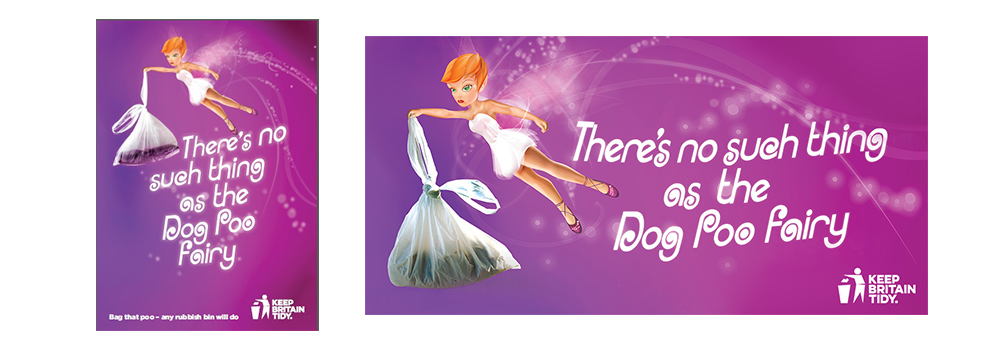
For some incomprehensible reason there is a subset of dog walkers who fully accept and follow the guidance to pick up and bag their dog’s faeces, but are blithe to the obvious requirement to dispose of the bags responsibly. Whether you’d rationalize it as unintentional littering, or left in a spot they mean to return to so as not to bear the burden throughout their walk, it is unacceptable laziness. Leaving the bags behind alone is a hazard for wildlife and livestock on the Forest, leaving poo bagged creates a toxic timebomb, a petri dish for growth of the bacterial nasties in the poo. Whether this should be part of a Littering or Dog Control PSPO, it merits a circle in Dante, and in some quarters already has campaigns targeting just this behaviour.
What Have We Left Out?
Many existing Dog Control PSPOs have limitations on the numbers of dogs per walker, usually between four and six (inclusive, for the pedants shouting “five”). We would support such a limitation, if Forest stakeholders would agree. The question may be difficult to address fairly: some owners seem to be unable to adequately control one dog off lead, where others may be able to marshal eight effectively. The expected argument being : should some be disadvantaged by the weaker links?
Oddly enough, the Kennel Club’s current guidance doesn’t address this at all, nor their earlier 2016 assessment, which mentions per walker numbers in passing as one of the features of the DCOs preceding PSPO. The Kennel Club did praise a change to Wyre Forest’s Dog Control PSPO which increased their limit from three to six, characterizing the original as an unfair blanket restriction. [**] Though the notion was under discussion in the formulation of the New Forest Dog Walkers Code, no agreed restriction survived the final draft. The Professional Dog Walkers’ Charter [††] includes a maximum of six dogs per walker. We were unable to endorse this charter primarily as it does not address the commercial use of the Crown Lands done outside the standard permission system, but also because we felt that six is not a realistic number for one person to adequately control off lead dogs on the Forest.
For both the dog fouling and leads requirements some PSPOs also include a stipulation to show that walkers are in possession of the equipment necessary to follow restrictions; for instance, specifying having the “means to pick up”, as their lack is tantamount to an intention to ignore the responsibility imposed by the order. However, including a power for authorised persons under the order to ask members of the public to produce their leads and poo bags as proof of compliance, may not square with the more education based and light touch enforcement which seems to be the current intention. These may only bear inclusion if requested by all Forest stakeholders, the authorities tasked with enforcement and New Forest District Council.
Hopefully, the other measures we propose, if given consideration and support, might advance the cause of responsible dog ownership in the New Forest, without recourse to more extensive rules. We look forward to discussion with other Forest groups, we believe these proposals would be a good starting point. Together we can offer New Forest District Council a sound way forward to a Dog Control PSPO.
ENDNOTES:
[*] Richmond Dog control order was partially quashed:
https://www.thekennelclub.org.uk/media-centre/2018/april/victory-for-dog-owners-in-uks-first-successful-pspo-legal-challenge/
https://www.telegraph.co.uk/news/2018/04/13/dogs-can-urinate-lampposts-court-rules/
https://www.richmond.gov.uk/services/parks_and_open_spaces/pspos_and_byelaws
https://www.lag.org.uk/article/205493/challenging-public-spaces-protection-orders
[†] From the Forestry Commission Byelaws:
Acts Prohibited on the Lands of the Commissioners
xii. permit any animal in his charge to be out of control; xiv. permit a dog for which he is responsible to disturb, worry or chase any bird or animal or, on being requested by an officer of the Commissioners, fail to keep the dog on a leash; |
https://www.forestryengland.uk/sites/default/files/documents/Forestry%20Commission_Byelaws.pdf
[‡ ] Out of Order, 2016, pg 12.
[§] Ibid., Forestry Commission Byelaws
[◊] The Portfolio holder responded to our suggestion of a Dog Control PSPO “It was felt there was not enough evidence at the current time to take this matter forward. However, it could be considered in the future. This approach had been accepted by partner organisations.” One of the evidence documents, cited to support the feeding ponies PSPO, a report by Dr. Jo Ivey collating incidents in 2018 made to either Camping in the Forest staff or to the Verderers Office showed Dogs worrying livestock made up 8% of the CITF incidents, and 33% of Verderers incidents. This included:
[**] https://www.thekennelclub.org.uk/media-centre/2021/march/the-kennel-club-welcomes-wyre-forest-district-council-s-decision/
Praise by KC for Wyre Forest increasing number of dogs per walker from 3 to 6, 31 March 2021:
“The maximum number of dogs a person can walk in a controlled manner depends on a number of factors relating to the dog walker and the dogs being walked as well as the location or time of the walk and therefore we don’t believe introducing blanket limits on the number of dogs walked is the best solution. Furthermore, placing a limit on the number of dogs a person can walk risks penalising responsible dog owners simply due to the number of dogs they own, rather than their ability to keep their dogs under control.
“The Kennel Club would recommend local authorities instead use “dogs on lead by direction” orders and targeted measures such as acceptable behaviour contracts and community protection orders to address people who don’t have control of the dogs they are walking.”
[††] https://www.newforestnpa.gov.uk/app/uploads/2020/03/New-Forest-Professional-Dog-Walkers-Charter.pdf
Registered charity no. 260328
New Forest Association © 2026
All rights reserved
All photographs ©
Photographs courtesy: Clive Chatters, Gale Pettifer, Steve Laycock, Mike Read, Brian Tarnoff, Peter Roberts, John Ward.